Be yourself; Everyone else is already taken.
— Oscar Wilde.
This is the first post on my new blog. I’m just getting this new blog going, so stay tuned for more. Subscribe below to get notified when I post new updates.
Be yourself; Everyone else is already taken.
— Oscar Wilde.
This is the first post on my new blog. I’m just getting this new blog going, so stay tuned for more. Subscribe below to get notified when I post new updates.
After traveling 94 million miles into deep space, the journey of NASA’s Kepler space telescope was finally completed in October of 2018. Operational since 2009, the telescope was able to detect a total of 2,681 exoplanets before running out of fuel. The archival data retrieved by Kepler will have immense value as it is continued to be analyzed by astronomers. Notably, this data has led to an astonishing discovery just this week.

Astronomers have identified an exoplanet 300 light-years away that has various promising Earth-like qualities. The planet is named Kepler-1649c. As we learned in class, both size and distance from a star impacts the habitability of any planet. Earth is the correct size and distance from the Sun to support liquid water and life. Kepler-1649c is only 1.06 times the size of Earth and receives 75% of the light compared to what Earth gets from the Sun. It orbits a red dwarf star which is much smaller and cooler than our star and therefore, must orbit much closer than we do to the Sun. A complete orbit of Kepler-1649c only takes about 19.5 Earth days.
There are still many things we do not know about this potentially habitable Earth-like planet. Due to barriers inherent to exoplanet detection methods, we do not know the composition of the atmosphere. This could impact the assumed temperature of the planet’s surface and reduce its ability to sustain life.
Further, the information gathered by the Kepler telescope is not absolute. Kepler-1649c was initially written off as a false positive by a computer program. It is only now that scientists have recombed through some of the data to discover this planet. Additionally, scientists suspect that there is another candidate planet in the same solar system. By analyzing orbital resonances, it is theorized that there might be a slightly closer planet that is also in the habitable zone of the star.
To conclude, missions like Kepler and TESS (Transiting Exoplanet Survey Satellite) provide vital data that can be analyzed to discover promising planets even after they have stopped transmitting. Thomas Zurbuchen, associate administrator at NASA’s Science Mission Directorate says that Kepler-1649c “gives us even greater hope that a second Earth lies among the stars, waiting to be found.”
The lectures from this unit, especially chapter 11 about the Jovian planets, reminded me of one of my favorite books; Sirens of Titan by Kurt Vonnegut. The novel is a comical science fiction story that chronicles the origin of Malachi Constant, a profit predestined to be sent into space and return to start a new religion on Earth. Winston Niles Rutherford is a wealthy space explorer who, as a result of being launched into the chrono-synclastic infundibulum which allowed him to experience all space and time, was able to prophesize Malachi Constant’s life path. This life path includes spending time in the Martian army, on Mercury, and stranded in a deep cave on Titan, the largest moon of Saturn. Malachi’s time on Titan is arguably the impetus to his future as a religious figurehead. Although entirely based on science fiction, the description of living on Titan made me even more excited to learn in class that a probe from the European Space Agency has landed on Titan. Titan is one of the few bodies in the outer solar system to which humans have sent a landing probe successfully.

In addition to exploring life in space, Vonnegut also delves into the concept of predestination. Rutherford was able to predict the entirety of Malachi’s life but could not allow him to forgo the necessary pain in the path to get there. At the beginning of the book, Malachi is a morally dubious character who tries to prevent these events from taking place. However, all of his actions end up leading him towards his destiny. This novel brings up a lot of the other moral implications of humans moving forward with space travel. Considering what I have learned in class, I choose to agree with Vonnegut and look ahead towards furthering the exploration of space.

I thoroughly enjoyed our class discussion about the origins of the hot, molten core of Earth. It is cool to think about how the modern heat in our planet’s interior is a result of thousands of years of activity and energy transfer.
As we learned in class, a planet derives internal heat from three sources during its lifetime. Accretion is one form of heat collection and happens in early formation. Collisions of planetesimals converts kinetic energy to thermal energy which is stored in the interior. Next, the process of differentiation adds heat to the planet due to more dense materials settling towards the gravitational center of the body. As mass falls, it converts potential energy to thermal energy therefore heating the core. Finally, heat from radioactive decay occurs throughout a planet’s lifetime. Overtime, the nuclei of elements lose subatomic particles which creates energy generating collisions.
Accretion and differentiation happen very early in a planet’s life while radioactive decay can occur consistently. It was interesting to me to learn that most of our planet’s heat is due to processes so long ago. It illustrates the sheer magnitude of the thermal energy in our planet’s core.

Over this spring break, I came across an intriguing article in National Geographic that illustrated the closeness of space to life on Earth. The authors review a recently published study in the field of marine biology that suggests new insights into the way grey whales migrate. Grey whales have one of the furthest migrations of any animal on Earth, traveling 10,000 miles annually through the Pacific Ocean. Of course, on a journey like this, navigation is paramount.
Still very little is known about grey whale migration mechanisms, however, these researchers have discovered a correlation between solar storms and whale stranding. This means that whales may navigate by orienting around the magnetic field around the Earth. The occurrence of solar storms bombards Earth’s atmosphere with high energy particles and temporarily disrupts the electromagnetic field.
Although the sun is so far away, it still impacts the daily lives of creatures on our planet. Solar flares have allowed us to learn more about grey whale migration and has allowed me to further comprehend the effective closeness of space.

Every time I pick up The Cosmic Perspective to do the assigned reading, I end up learning something new and exciting. This unit, while I was reading Chapter 3 “The Science of Astronomy” one particular part struck me. The textbook mentions a Spanish monarch named Alphonso X who lived from 1221 to 1284. Alphonso X had complied the most modern tables of planetary motion based on the Ptolemaic model until Copernicus’s revolution nearly 200 years later. Astronomers knew Alphonso’s tables were flawed but many people were unwilling to take on the arduous task of fixing the underlying theories. Alphonso was credited with saying “If I had been present at the creation, I would have recommended a simpler design for the universe (64).” This quote caught my interest because it highlights just how incredible it is that humanity knows even anything about space. We are so small in the universe but are able to use our brains and empirical information over ages and ages. Especially considering how challenging it must have been to understand the universe while lacking the modern technology we have now. This quote also inspires me to think about all that we will learn about space in the future.
I’m sure you have heard the phrase “once in a blue moon” which is widely used to describe rare or seldom events. However, it wasn’t until I was in high school that I learned the true origins of the colloquial phrase. After seeing an article headline announcing the occurrence of a blue moon, my friend and I decided to drive out to a lookout late at night to get a better view. When we arrived, we were stumped to notice that the moon did not appear blue at all! At this point I looked for the article on my phone and actually read past the headline to hopefully provide an answer to our confusion.
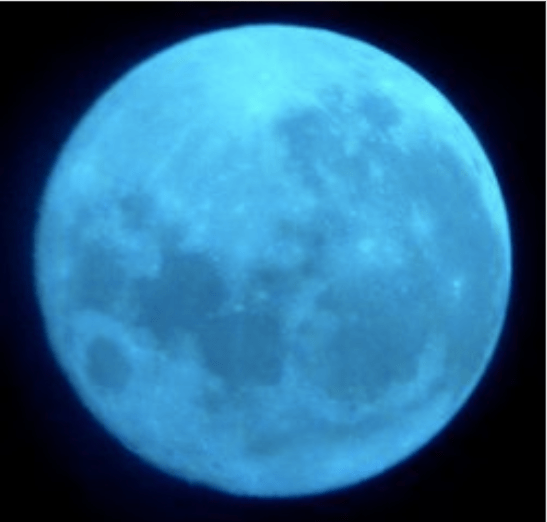
As it turns out, a blue moon should not look any different from any another full moon! The term is just used to denote the second full moon of the month. I learned from the article that most months only exhibit one full moon due to the lunar cycle. According to NASA, the lunar cycle is 29 days and the average month is 30 or 31 days meaning that the blue moon should occur every 2 and a half years.
At the end of the night, we felt pretty silly. However, we were still able to see a beautiful full moon on a lovely night.

Welcome to my astronomy blog! In my first post, I would like to talk about the idea astrology in order to introduce some of my personality and discuss what I learned in the reading this week.
I have a twin brother with a wildly different personality so I have always been skeptical of astrological personality types. Therefore, I have always wondered what it exactly means to be a Leo. I find myself relating to certain characteristics of Leos, however lack other qualities.
After reading Chapter 2 of The Cosmic Perspective, I fully began to understand the true definition of a Leo. In short, it means my brother and I were born during the time of the year where the constellation, Leo, is hidden by the sun.
Our personalities should have no relationship to the relative location of the sun when we were born. However, the study of astrological signs is an important illustration of the relationship between astronomy and human behavior.
This is an example post, originally published as part of Blogging University. Enroll in one of our ten programs, and start your blog right.
You’re going to publish a post today. Don’t worry about how your blog looks. Don’t worry if you haven’t given it a name yet, or you’re feeling overwhelmed. Just click the “New Post” button, and tell us why you’re here.
Why do this?
The post can be short or long, a personal intro to your life or a bloggy mission statement, a manifesto for the future or a simple outline of your the types of things you hope to publish.
To help you get started, here are a few questions:
You’re not locked into any of this; one of the wonderful things about blogs is how they constantly evolve as we learn, grow, and interact with one another — but it’s good to know where and why you started, and articulating your goals may just give you a few other post ideas.
Can’t think how to get started? Just write the first thing that pops into your head. Anne Lamott, author of a book on writing we love, says that you need to give yourself permission to write a “crappy first draft”. Anne makes a great point — just start writing, and worry about editing it later.
When you’re ready to publish, give your post three to five tags that describe your blog’s focus — writing, photography, fiction, parenting, food, cars, movies, sports, whatever. These tags will help others who care about your topics find you in the Reader. Make sure one of the tags is “zerotohero,” so other new bloggers can find you, too.

 Claire's Space Jam
You must be logged in to post a comment.